

How to Beat a Probation Violation in Charlotte, NC
To beat a probation violation in Charlotte, NC, individuals should focus on the specific facts of the alleged violation, especially if the violation was not willful. Defenses can include demonstrating a lack of notice, a miscommunication, or circumstances beyond one’s control, such as a medical or scheduling issue. Additionally, challenging the completeness or clarity of the evidence presented by providing documentation, explanations, or contesting the reporting of the violation can be effective.
Understanding how to beat a probation violation in Charlotte, NC, often becomes important after someone is accused of not following court-ordered conditions. A violation of probation can result in significant consequences, including additional restrictions and even jail. Probation violation cases move quickly through the courts, and the outcome is fact-specific, depending on the evidence presented and how the case is handled early on in the process.
Hire a Probation Lawyer
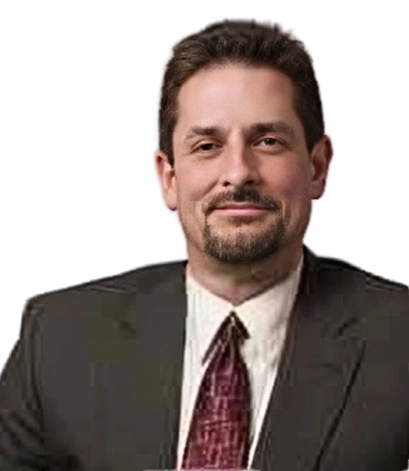
The Law Office of Kevin L. Barnett represents individuals in Charlotte and throughout Mecklenburg County in criminal matters, including probation violation cases. Kevin Barnett has over 30 years of experience handling both misdemeanor and felony charges, and he regularly appears in Mecklenburg County courts.
His familiarity with local procedures, prosecutors, and judges supports a well-informed approach to evaluating probation violations and responding effectively within the local court system. If you need a probation violation defense lawyer in Charlotte, NC, reach out to us as soon as possible for qualified legal representation.
What Counts as a Probation Violation in North Carolina
In North Carolina, a probation violation is a breach of one or more of the conditions the court has placed on a defendant who has been given probation. Conditions may include regularly reporting to a probation officer, paying fines or restitution to victims, completing a treatment program, and abstaining from new criminal conduct. Probation violations are commonly classified as either technical or substantive in nature.
Technical violations can be triggered by events such as missing appointments with the probation officer, failing drug tests, or failing to complete a program. Substantive violations generally involve new criminal charges. After a violation has been alleged, it can be reported to the court. Following an alleged violation, the court might set a hearing before a judge to review the facts and decide whether probation terms were broken, as well as what the next steps will be.
Possible Defenses to a Probation Violation
Defending a probation violation charge typically hinges on the particular facts of the alleged violation conduct. For example, if a person has not willfully violated a condition, this is a consideration the court would want to take into account. A miscommunication, a lack of notice, or some circumstance outside of a person’s control, like a medical or scheduling issue, may all play a role in whether the alleged violation is substantiated.
Alternatively, the presented evidence of the alleged violation might currently be lacking in completeness or clarity. Raising these concerns can often entail the provision of documentation, explanations about relevant timelines, or contesting how a violation has been reported. All of these matters would be considered based on the facts of a particular situation.
Potential Consequences of a Probation Violation in North Carolina
When a judge finds that a violation has occurred, numerous potential sentences can be ordered based on the violation itself and the history of violations. In North Carolina, a judge may order confinement for violation of probation (CRV). In felony cases, a CRV is typically 90 days in jail. In misdemeanor cases, the period of confinement can be up to 90 days, depending on the circumstances and prior violations.
For technical violations, the court can order short jail stays of 2 to 3 days, often referred to as “quick dips.” The judge can also extend the term of probation, impose additional conditions such as electronic monitoring or treatment, or increase the required supervision.
When the violation is a new criminal offense or for repeated noncompliance, the court can revoke probation and impose the entire suspended sentence, requiring the person to serve the original jail or prison sentence.
FAQs for Charlotte Probation Lawyers
Q: How Common Is Probation in the United States?
A: Probation is one of the most frequently imposed types of criminal supervision in the United States. As of 2022, there were 3,668,800 adults under a form of probation or parole, according to the Bureau of Justice Statistics. This means both that courts commonly impose probation as an alternative to incarceration and that probation violations are also common within the criminal justice system.
Q: What Is the Burden of Proof in a Probation Violation Hearing?
A: The standard of proof is less strict in a probation violation hearing than it is in a criminal trial. Under North Carolina General Statutes § 15A-1345, judges must decide if a probation condition was violated based on a preponderance of the evidence, not beyond a reasonable doubt. This standard allows the court to consider whether the violation was willful and whether the condition of probation was broken.
Q: How Often Do Probation Violations Lead to Jail or Prison Time?
A: Probation violations may result in jail or prison time, depending on the facts and the offender’s prior record. Courts may order jail time when a violation is repeated or if it involves more serious behavior.
According to the Bureau of Justice Statistics, in 2021, 44% of all admissions to state prisons were the result of probation or parole violations. This illustrates how violations can impact sentencing outcomes when courts decide continued supervision is no longer appropriate.
Q: Where Are Probation Violation Cases Handled in Charlotte, North Carolina?
A: Probation violation hearings in Charlotte are typically held in Mecklenburg County District or Superior Court, depending on the original charge. They will be heard before a judge in the Mecklenburg County Courthouse. The judge will hear the alleged violation and will make a determination on how to proceed in your case. There may be other issues depending on local court rules and scheduling.
Contact a Charlotte Probation Lawyer
Probation violation allegations in Charlotte are dependent upon the facts of the underlying offense, conditions of supervision, and characterization of the alleged conduct.
The Law Office of Kevin L. Barnett represents Mecklenburg County citizens charged with probation violations, taking a critical look at the way cases are presented to the judge for analysis. We meticulously examine the procedural and evidentiary history of each case to address the legal issues involved on an individual basis. Schedule a consultation to hire a probation lawyer today.



Contact Us
How Can We Help You?
Start Defending Yourself Today
Whether you’ve been charged with a DWI or are facing serious white collar crime charges, you can trust our experienced Charlotte criminal defense attorneys to present a strong defense from beginning to end. Schedule a free initial consultation at our Charlotte office to learn more. Call 704-334-2044 or reach us online.

© Copyright 2026 The Law Office of Kevin L. Barnett • All Rights Reserved. Disclaimer | Site Map | Privacy Policy
Digital Marketing By 
*Images are obtained under license from Canva and other third-party stock image providers, with attribution included where required.